


Where to go wine tasting in Italy
Italy has hundreds of wineries worth visiting, from architectural landmarks in Tuscany to historic estates in Valpolicella and terraced vineyards in Valtellina. This guide brings together 30 of the best wineries in Italy and some of the best vineyards to visit in Italy, based on my own winery visits, the wines I regularly drink, and the estates still on my wishlist.
I come from a family that loves wine. Reds, whites, sparkling, all of it, and the interest was never academic. Over the years I have visited wineries across Umbria, Lazio, Lombardy, and Veneto, and abroad, completed a sommelier course, and built many of my travels around local wine. Some of the wineries in this guide are places I have personally visited. Others produce wines I regularly drink and recommend, while a smaller selection remains on my own winery wishlist. I have clearly identified each one so you know exactly what my recommendation is based on.
Rather than trying to include every famous Italian producer, I selected wineries that offer something memorable beyond the bottle. That might be exceptional architecture, a beautiful vineyard setting, a meaningful introduction to the region, an excellent tasting experience, or the possibility of combining wine with lunch or an overnight stay. For help choosing the right destination, start with my guide to the best wine regions in Italy. Travelers who want to sleep among the vines should also read my guide to the best vineyard hotels in Italy.
The must-have wine-tasting experiences in Italy
Embarking on a wine-tasting tour across Italy is like flipping through the pages of a well-loved cookbook. Each region offers a different taste, a different grape, and a unique story behind its wines. While every region has its own charm, several experiences stand out as quintessential Italian wine adventures:
- Vineyard Tours: Explore the picturesque vineyards that carpet the Italian countryside, where rows of grapevines stretch as far as the eye can see. Guided tours provide insights into the winemaking process, from cultivation to harvest, offering visitors a deeper appreciation for the labor of love behind each bottle.
- Cellar Visits: Descend into ancient cellars and underground caves, where barrels and casks age gracefully, imparting complexity and character to the wines. Discover the secrets of fermentation and aging as you wander through dimly lit corridors lined with oak and chestnut barrels.
- Wine Pairing Dinners: Indulge in the art of food and wine pairing with exquisite dinners hosted by local wineries. Savory dishes crafted from fresh, seasonal ingredients complement the nuanced flavors of Italian wines, creating harmonious culinary experiences that linger in the memory.
- Harvest Festivals: Join in the festivities during the annual grape harvest, known as “vendemmia,” where vineyards come alive with music, laughter, and the aroma of ripe fruit. Participate in grape picking activities and traditional rituals, followed by celebratory tastings of newly pressed wines.
If you want to turn a simple tasting into a full immersion in Italian wine culture, many estates also offer beautiful accommodations surrounded by vineyards. In that case, you may want to explore my guide to the best wine resorts in Italy, where you can stay directly on historic wine estates and wake up among the vines.
Best Wineries in Umbria
Umbria is often overshadowed by neighboring Tuscany, but it is one of the Italian wine regions I feel most personally connected to. My family has a house in Assisi, and Montefalco Rosso has been on our table for as long as I can remember. The most important local grape is Sagrantino, which produces powerful, tannic wines with considerable aging potential. Montefalco Rosso, meanwhile, is not a grape variety but a red wine appellation usually based on Sangiovese and blended with other grapes, including Sagrantino. The countryside surrounding Montefalco is beautiful throughout the year, although spring and early fall are particularly pleasant for vineyard visits.
Arnaldo Caprai
Location: Montefalco
Known for: Sagrantino and Montefalco Rosso
A beacon of innovation in Montefalco, Arnaldo Caprai is synonymous with the Sagrantino grape, which they have championed since the 1970s. Their Montefalco Sagrantino is a powerhouse, dense with tannins yet beautifully balanced, showcasing notes of blackberry, spices, and leather.
I grew up drinking their Montefalco Rosso and Sagrantino, so visiting the estate felt more personal than arriving at an unfamiliar winery for a tasting.
I recently went with my friend Elba while she was visiting me in Italy. The experience began with a walk through the vineyards, followed by a tour of the winery, where we learned more about the production and aging process. We then sat outside for a long brunch accompanied by the estate’s wines.
The setting is beautiful, especially when the weather allows you to spend time outdoors overlooking the vineyards. The winery organizes several tasting formats, vineyard experiences, and seasonal events, particularly during spring and summer. Reserving in advance is essential.

Tenuta Castelbuono – il Carapace
Location: Bevagna / Montefalco
Known for: Sagrantino and Montefalco Rosso
I visited Tenuta Castelbuono’s striking Carapace winery the day before New Year’s Eve with my husband Luca, my brother, and my sister-in-law Valentina. Even before the tasting begins, the building makes the experience worth the journey.
Known as Il Carapace, the winery was designed by Italian sculptor Arnaldo Pomodoro. Its rounded copper form rises from the vineyards like a giant tortoise shell, while the interior feels closer to an inhabitable sculpture than a conventional wine cellar.
During our visit, we descended into the production and aging areas beneath the building. The architecture becomes even more impressive underground, where the shape of the structure, materials, and light create an almost theatrical atmosphere.
The tasting was excellent and accompanied by small local snacks. Ziggurat, the estate’s Montefalco Rosso, was one of my favorites, but the Sagrantino Passito was the wine I remembered most. Rich and intense without feeling heavy, it remains one of my favorite expressions of sweet Sagrantino.

Antonelli San Marco
Location: Montefalco
Known for: Sagrantino and Montefalco Rosso
Antonelli San Marco produces one of the Montefalco Rossos I regularly order when I see it on a wine list. It is the kind of wine that immediately brings me back to Umbria, with enough structure to accompany meat and rich pasta dishes while remaining much more approachable than a young Sagrantino.
The estate is surrounded by vineyards in the Montefalco countryside and produces both the region’s famous reds and local white wines. Its Grechetto is worth trying if you want to understand that Umbria’s wine identity extends beyond Sagrantino.
Although I have not visited the winery yet, it earns a place in this guide because the wines have been consistently reliable whenever I have ordered them.

If you’re planning on visiting this beautiful region known as the green heart of Italy, check out my travel guide to Umbria for more information.
Best Wineries in Tuscany
Tuscany is perhaps the most renowned wine region in Italy, celebrated for its picturesque landscapes and its pivotal role in the history of winemaking. Famous for producing Sangiovese-based wines such as Chianti and Brunello di Montalcino, Tuscany offers a range of flavors from bold and structured reds to fresh and aromatic whites like Vernaccia di San Gimignano. Tuscany is also home to the Super Tuscan wines, a term used for Tuscany wines that don’t adhere strictly to traditional blending laws, often incorporating non-native grapes like Merlot and Cabernet Sauvignon. The best time to visit Tuscany for wine lovers is during the harvest season in September and October, though spring also offers beautiful vineyard blossoms and cooler tasting conditions.
Ornellaia
Location: Bolgheri
Known for: Super Tuscan blends (Cabernet Sauvignon, Merlot, Cabernet Franc)
Ornellaia is one of Italy’s most celebrated estates and one of the wineries at the top of my personal wishlist. Located near Bolgheri on the Tuscan coast, it helped establish the international reputation of the wines now commonly described as Super Tuscans.
Its flagship wine is created primarily from Bordeaux grape varieties, including Cabernet Sauvignon, Merlot, Cabernet Franc, and Petit Verdot. The result is structured and age-worthy, but the attraction of visiting extends beyond the wine itself.
The estate combines vineyards, contemporary art, architecture, and highly curated hospitality. Visits can include the vineyards, production spaces, barrel cellar, historic wine archive, and artworks connected to the Vendemmia d’Artista project.
This is the winery I would choose for a special occasion or for travelers who already know Italian wine and want to experience one of the country’s most prestigious names.

Antinori nel Chianti Classico
Location: Bargino
Known for: Tignanello, Sangiovese blends
My father has visited Antinori nel Chianti Classico, but I have not managed to organize my own visit yet. It is one of those wineries where advance planning matters, because the tastings are booked out months in advance.
The winery is built into a hillside and is almost invisible from a distance. Long horizontal lines, terracotta, glass, concrete, and Corten steel allow the structure to merge into the surrounding Chianti landscape. Inside, the architecture is designed around the wine production process. Visitors move through the winery while learning about more than six centuries of Antinori family history and the evolution of Tuscan wine.
The estate offers several levels of tours, from introductory visits to more detailed experiences that include a wider selection of wines or lunch at the rooftop restaurant, Rinuccio 1180.

Petra
Location: Suvereto
Known for: Bordeaux-style blends (Cabernet Sauvignon, Merlot)
Petra entered my list during my sommelier course, when our instructor recommended both the winery and its wines. It immediately caught my attention because it offers a different version of Tuscany from the familiar cypress-lined roads of Chianti.
Located near Suvereto in the Maremma, the winery was designed by Swiss architect Mario Botta. Its cylindrical central structure and long staircase appear to emerge directly from the hillside, creating one of the most recognizable winery designs in Italy.
The warmer coastal climate is particularly suited to varieties such as Cabernet Sauvignon and Merlot. The wines tend to be structured, generous, and marked by ripe fruit and Mediterranean character. Petra feels like a strong choice for travelers who have already explored Chianti or Montalcino and want to discover a quieter part of the Tuscan wine landscape.

Frescobaldi
Location: Multiple estates across Tuscany
Known for: Sangiovese, Brunello di Montalcino, Pomino whites, coastal Tuscan wines
Frescobaldi is difficult to reduce to a single winery. The family has several estates across Tuscany, each representing a different landscape, climate, and wine tradition. Castello Nipozzano is located in Chianti Rufina, a short distance from Florence. CastelGiocondo is surrounded by Brunello di Montalcino vineyards, while Castello Pomino sits at a higher altitude and is particularly interesting for its white wines.
I have tasted many Frescobaldi wines over the years, and what makes the producer especially useful for travelers is the range of experiences available. Depending on the estate, you can organize a tasting, meal, or countryside stay. For a first visit, choose the estate according to the rest of your itinerary. Nipozzano works well from Florence, CastelGiocondo is the natural option near Montalcino, and Pomino offers a quieter mountain setting.

Mazzei
Location: Castellina in Chianti
Known for: Chianti Classico, Sangiovese
The Mazzei family has been associated with wine in Tuscany for centuries, and its historic base at Castello di Fonterutoli feels like a small village rather than a conventional winery.
I know Mazzei through its wines, but the reason I would choose it for a future visit is the possibility of turning the tasting into a complete countryside stay. Rooms and suites are distributed around the village, while the estate also has an osteria and several wine experiences.
The winery itself combines contemporary production spaces with the atmosphere of historic Fonterutoli. This makes it suitable for travelers who want to learn about Chianti Classico but also care about where they eat and sleep.

If you’re planning to spend more time exploring the region, consider staying in the countryside itself. I’ve also put together a guide to the best Tuscany countryside hotels, many of which are set among vineyards and historic wine estates.
Best Wineries in Lazio
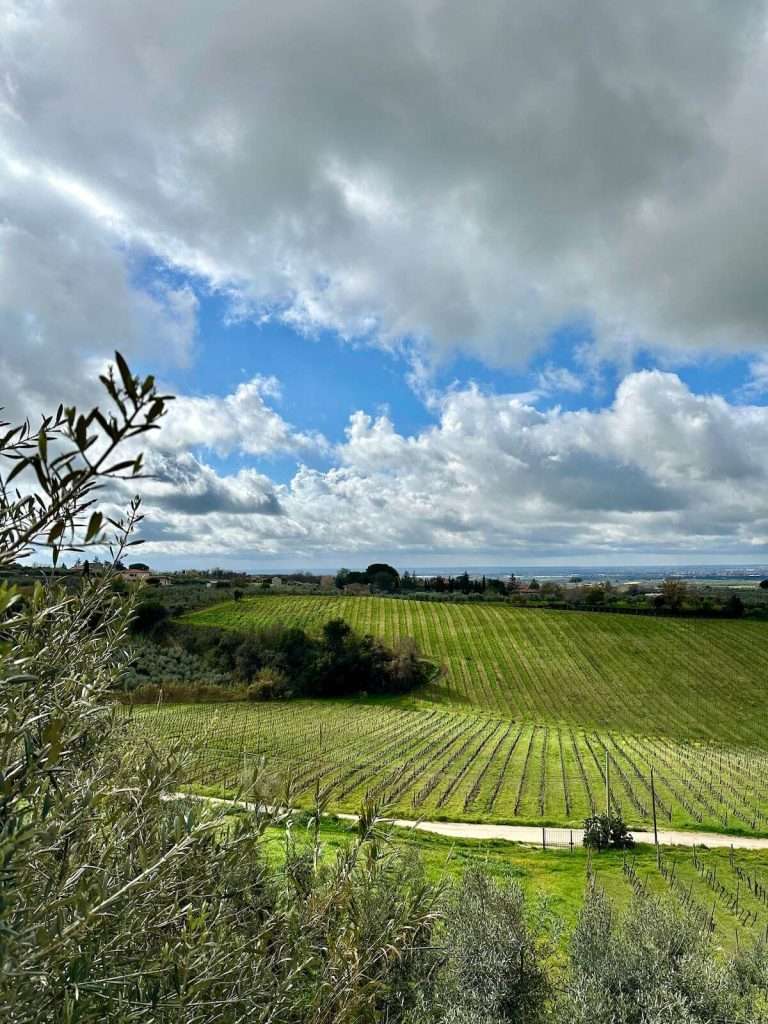
Lazio, the region surrounding Rome, is often overshadowed by its ancient history and monumental landmarks. However, its wineries produce some unique wines that deserve recognition. Known primarily for white wines like Frascati, made from Malvasia and Trebbiano grapes, the region also produces interesting reds from Cesanese and Sangiovese grapes. The volcanic soil of the region lends a distinctive minerality to its wines, making them unique. Lazio’s wineries are best visited in the spring or autumn to avoid the summer heat, providing an ideal climate for leisurely tastings and vineyard tours.
Marco Carpineti
Location: Cori
Known for: Bellone, Nero Buono
Marco Carpineti is one of the best wineries to visit from Rome, particularly for travelers who want to discover indigenous Lazio grapes rather than more familiar international varieties. It took us around an hour to reach the estate from the city. The vineyards and surrounding countryside were lovely, and the person leading our tasting made the experience approachable and genuinely interesting.
We booked a visit that included lunch, which I strongly recommend. Eating at the estate gave us more time to enjoy the wines and made the trip feel like a complete day in the countryside rather than a short tasting. One of my favorite wines from Marco Carpineti is KIUS, its Metodo Classico sparkling wine. I also loved Capolemole Rosso, made with local red varieties and well suited to the food of the region.
Best Wineries in Lombardy
Lombardy is far more varied as a wine region than many people expect. While Franciacorta is its most famous name, known for elegant Metodo Classico sparkling wines made mainly from Chardonnay, Pinot Nero, and Pinot Bianco, the region also includes the steep alpine terraces of Valtellina, where Nebbiolo, locally called Chiavennasca, produces more lifted, mineral, mountain shaped reds. Further south around Lake Garda, Lugana stretches across Lombardy and Veneto, where Turbiana thrives in glacial, clay rich soils and gives rise to fresh, structured whites with notable longevity. Together, Franciacorta, Valtellina, and Lugana show just how diverse Lombardy’s wine landscape can be.
Monte Rossa
Location: Bornato
Known for: Franciacorta, Cabochon
I visited Monte Rossa while staying with my brother in Milan. Some of his food and wine obsessed friends had organized the day, beginning with a tasting at the winery and continuing with lunch nearby. Sparkling wine is probably my favorite thing to drink, so Franciacorta is naturally one of the Italian wine regions I most enjoy visiting. Monte Rossa made a wonderful introduction to the area.
The winery is set around a historic villa, but the production spaces extend underground and feel much more contemporary. The estate is particularly famous for Cabochon, its flagship Franciacorta. The entire day was exactly what I want from a winery experience: good wine, people who were excited to share it, beautiful countryside, and a long lunch afterward.

Ar.Pe.Pe.
Location: Sondrio
Known for: Nebbiolo (Chiavennasca)
Ar.Pe.Pe. represents a completely different side of Lombardy. Rather than sparkling wine and gentle hills, its Nebbiolo grows on stone terraces built into the steep slopes of Valtellina. I first tasted the winery’s Il Pettirosso Valtellina Superiore with friends. Later, the sommelier teaching my course also recommended Ar.Pe.Pe. as one of the producers to know in the region.
The winery belongs in this guide because visiting Valtellina means seeing one of Italy’s most extraordinary examples of heroic viticulture, where almost every stage of vineyard work must be completed on steep terrain.
Ca’ Del Bosco
Location: Erbusco
Known for: Franciacorta
Ca’ Del Bosco is on my list of wineries to visit, although I have had its wines many times. Its Cuvée Prestige is among the most recognizable bottles from Franciacorta and a reliable introduction to the producer’s style.
The winery is known for its meticulous approach to production and its striking combination of wine, architecture, and contemporary art. Even the famous entrance, marked by a suspended rhinoceros sculpture, signals that this will not be a traditional rustic cellar visit.
This is one of the wineries I would recommend to someone visiting Franciacorta for the first time, particularly if they are drawn to polished, design-focused experiences.

Berlucchi
Location: Borgonato
Known for: Franciacorta, Metodo Classico pioneers
Guido Berlucchi has a special place in my life for a reason that has very little to do with technical tasting notes. It was the bottle Luca and I opened after he proposed to me in Malaysia, so every time I see Berlucchi ’61, I think of that night.
The estate also occupies an essential place in the history of Franciacorta. In 1961, Franco Ziliani and Guido Berlucchi created the first bottle of sparkling wine from the region produced using the traditional method, helping to establish the identity Franciacorta has today.
That combination of history and personal memory makes Berlucchi one of the wineries I am most excited to visit. The historic cellars beneath Palazzo Lana add another reason to choose it, particularly for travelers who want to understand how Franciacorta developed rather than focusing only on the finished wines.
Bellavista
Location: Erbusco
Known for: Franciacorta, Alma Gran Cuvée
Bellavista is another Franciacorta producer whose wines I have enjoyed many times, although I have not visited the winery yet. The estate sits on Bellavista Hill near Lake Iseo, with vineyards spread across different parts of the Franciacorta area. The wines tend to feel elegant and refined, with the depth and texture that come from extended aging and careful blending.
Bellavista would work particularly well for a romantic Franciacorta itinerary, especially when combined with a stay at L’Albereta or time around Lake Iseo.
Best Wineries in Veneto
Veneto is a diverse and prolific wine region in northeastern Italy, producing everything from the light and bubbly Prosecco to the rich and powerful Amarone. Prosecco, made using the Glera grape, is beloved for its approachable style and is primarily produced using the Charmat method, which emphasizes freshness and aroma. Meanwhile, Amarone della Valpolicella is a deeply concentrated red wine made using the traditional appassimento method, where grapes are dried before fermentation. Ideal times to visit are late spring and early autumn, when the weather is pleasant and the vineyards are either blossoming or harvesting.
Villa Mosconi Bertani
Location: Novare
Known for: Amarone, Valpolicella Ripasso
I visited Villa Mosconi Bertani with Luca’s family and immediately understood why it is one of the most beautiful wineries in Valpolicella. The estate includes an elegant 18th-century villa, historic cellars, vineyards, formal gardens, and a romantic park. Walking through the property feels closer to visiting a country residence than a production facility.
During the tour, we saw the rooms where grapes are dried for the appassimento process and learned how this technique contributes to the concentration and structure of Amarone The tasting included Valpolicella Ripasso and Amarone, both of which were excellent. The surprise for me was the Soave, which I loved and still remember alongside the more famous reds.

Zenato – Tenuta S. Cristina
Location: Peschiera del Garda
Known for: Lugana, Amarone
Zenato is one of those producers I associate immediately with Lugana. I have ordered its wines many times, and they are consistently a safe choice when I want a structured Italian white with freshness and minerality.
The winery has a dual identity. Its Lugana wines are connected to the southern shores of Lake Garda, while its red wines draw from the Valpolicella tradition, including Amarone. This makes Zenato particularly useful for travelers who want to explore more than one style without organizing visits in completely separate areas.
Pieropan
Location: Soave
Known for: Soave Classico (Calvarino, La Rocca)
Pieropan‘s Soave is top notch and one of the producers that changed the international perception of the appellation. Calvarino feels particularly fresh and precise, while La Rocca is generally richer and more structured. Pieropan is on my list because it offers the opportunity to experience Soave beyond the inexpensive, uncomplicated bottles many travelers may associate with the name.
The winery’s contemporary building also adds visual interest to the experience, creating a contrast with the medieval town of Soave nearby.

Inama
Location: Soave
Known for: Garganega, volcanic Soave
Inama is another producer that demonstrates how interesting Soave can be when the wines are connected to specific vineyards and volcanic soils. Its white wines are made primarily from Garganega and tend to balance freshness with texture and savory minerality. The producer also makes red wines in the Colli Berici area, adding a second identity to the portfolio.
I would particularly recommend Inama to wine travelers who prefer focused, educational tastings over highly polished hospitality experiences.
Best Wineries in Piedmont
Piedmont is one of Italy’s most prestigious wine regions, especially for Barolo and Barbaresco. Both are made from Nebbiolo, a grape known for its pale color, high acidity, firm tannins, and complex aromas. The Langhe landscape is also one of the most beautiful wine destinations in Italy, particularly in fall when the vineyards change color and the white truffle season begins.
Michele Chiarlo
Location: Calamandrana
Known for: Barolo, Barbaresco, Barbera
Michele Chiarlo is an excellent choice for travelers who want to understand more than one side of Piedmontese wine. The producer works with Nebbiolo in both Barolo and Barbaresco, while also producing expressive Barbera from the Monferrato area. This makes a tasting especially useful for comparing different grapes, soils, and wine styles within the same region. The wines tend to be refined and approachable while retaining the structure and character associated with Piedmont.

Ceretto
Location: Alba / Langhe
Known for: Barolo, Barbaresco
Ceretto is one of the Piedmontese producers I already know well through Blangé, its Arneis, which I have drunk countless times over the years. It is fresh, aromatic, and easy to enjoy, and it is often one of the bottles I choose when I want a Piedmontese white rather than one of the region’s more famous reds.
The family also produces important Barolo and Barbaresco wines from vineyards across the Langhe. Its wineries are among the most recognizable in the region, particularly Bricco Rocche in Castiglione Falletto, with its glass cube overlooking the Barolo vineyards, and Bricco Asili in Barbaresco.
Although I have not visited the estates yet, Ceretto belongs in this guide because I already have a genuine connection to its wines. A visit would allow me to discover the producer beyond Blangé and explore how Ceretto interprets Nebbiolo across Barolo and Barbaresco.

Marchesi di Barolo
Location: Barolo
Known for: Barolo
My connection to Marchesi di Barolo actually began with Peiragal, its Barbera d’Alba. Luca and I first tasted it at a wine shop in Verona after the sommelier recommended the bottle to us, and we both loved it. Since then, whenever I find Peiragal on a restaurant wine list, I tend to order it.
The winery is also one of the most historic producers in Barolo, with cellars in the center of the village and a legacy closely connected to the development of the wine. A visit would allow me to discover its famous Nebbiolo wines while returning to the producer through the Barbera that first made me notice it. Peiragal is full and elegant, with dark berries, spice, and soft tannins.
Best Wineries in Trentino-Alto Adige
Trentino-Alto Adige is shaped by altitude, Alpine soils, and considerable temperature differences between day and night. These conditions help preserve acidity and fragrance, producing precise white wines and some of Italy’s most elegant sparkling wines. The region is an excellent choice for travelers who want to combine wine tasting with mountains, hiking, historic towns, and cooler summer temperatures.
Cantine Ferrari
Location: Trento
Known for: Trentodoc, Metodo Classico sparkling wines (Chardonnay)
Cantine Ferrari is one of the defining names of Trentodoc and a winery I want to visit as part of a longer trip through Trentino. Founded by Giulio Ferrari in the early 20th century, the winery became known for producing Metodo Classico sparkling wines primarily from Chardonnay grown at altitude.
What makes Ferrari particularly interesting is the intuition behind its origins. After traveling through France, Giulio Ferrari recognized a striking similarity between the Champagne region and Trentino, both in climate and soil. That insight shaped the identity of the winery from the very beginning, with Chardonnay becoming the central grape.
Today, under the Lunelli family (the same from Tenuta Castelbuono in Umbria), Ferrari has grown into one of Italy’s most important producers, while maintaining a strong focus on quality and precision. The wines are defined by freshness, elegance, and a fine, persistent perlage, with aging playing a key role in developing complexity. Tastings are available throughout the year, often paired with local products, and can be extended into a full experience with lunch at Locanda Margon, the family’s Michelin-starred restaurant.

Abbazia di Novacella
Location: Novacella
Known for: Kerner, Sylvaner, Gewürztraminer
Abbazia di Novacella is one of the wineries I am most interested in visiting because the experience combines wine with centuries of religious and cultural history.
The Augustinian abbey was founded in the 12th century and remains an active monastery. Its vineyards produce several of Alto Adige’s characteristic white varieties, including Kerner, Sylvaner, and Gewürztraminer.
The wines are shaped by altitude and cool temperatures, with freshness, perfume, and distinct minerality. Visiting the abbey adds a historical and architectural dimension that is difficult to find elsewhere in Italian wine country.
Franz Haas
Location: Montagna
Known for: Pinot Nero
Franz Haas earned its place on this list through its Pinot Nero. My friend Ludovico, who knows an extraordinary amount about wine, brought a bottle to our Thanksgiving dinner, and it was perfection. It’s one of Alto Adige’s most iconic producers, known for elevating Pinot Nero to world-class levels. The winery’s labels, designed by artist Riccardo Schweizer, are as distinctive as the wines themselves. Our sommelier instructor also spoke enthusiastically about Franz Haas and repeatedly described it as one of the Alto Adige producers we needed to know.
Pinot Nero has long been central to the winery’s identity, and its versions are known for their elegance, red fruit, spice, and fine structure. I have not visited yet, but after that bottle and my instructor’s recommendation, it is firmly on my list.

St. Michael-Eppan
Location: Appiano
Known for: Pinot Bianco, Sauvignon Blanc
St. Michael-Eppan makes some of my favorite wines of all time. The Pinot Bianco Schulthauser is one I return to regularly, with the freshness, creaminess, and bright acidity I love in Alto Adige whites.
The winery is a cooperative, but the quality and consistency of its wines make it one of the region’s most respected producers. Its range offers an excellent introduction to how expressive Pinot Bianco, Sauvignon Blanc, and Pinot Nero can be in the Alpine climate. Schulthauser has been bottled since 1982 and is now one of the best-known Pinot Biancos from Alto Adige.
Elena Walch
Location: Tramin
Known for: Gewürztraminer, Lagrein e Schiava
Elena Walch is one of those producers that, for me, rarely misses. I have enjoyed so many of its wines over the years, from the Pinots to the more aromatic Alto Adige varieties, and they are consistently elegant and beautifully balanced.
Its Pinot Bianco is particularly fresh and mineral, while the wider collection offers a wonderful introduction to the diversity of the region. The estates, including Castel Ringberg and Kastelaz, also make Elena Walch one of the wineries I would most like to experience in person.

Best Wineries in Abruzzo
Abruzzo lies between the Apennine Mountains and the Adriatic Sea. The combination of altitude, sunlight, and coastal influence creates excellent conditions for Montepulciano d’Abruzzo and Trebbiano d’Abruzzo. Wine tourism here generally feels quieter and more personal than in Tuscany or Piedmont.
Emidio Pepe
Location: Torano Nuovo
Known for: Montepulciano d’Abruzzo, Trebbiano
Emidio Pepe is one of the most respected names in Abruzzo and a producer with an uncompromising approach to traditional winemaking. The family is known for working by hand and allowing the wines to develop slowly over time. Its Montepulciano d’Abruzzo can age for decades, evolving from dark fruit and earthy flavors into something increasingly complex.
This would be a destination for serious wine lovers rather than travelers looking primarily for elaborate hospitality or dramatic architecture.

Best Wineries in Campania
Campania has one of Italy’s most exciting collections of native grape varieties. Aglianico produces structured reds such as Taurasi, while Fiano and Greco create complex white wines with freshness and aging potential. The inland Irpinia area is especially important, with elevated vineyards and volcanic soils contributing to the character of the wines.
Casa D’Ambra
Location: Forio, Ischia
Known for: Biancolella and native Ischitan grape varieties
Casa D’Ambra is one of the Campania producers I feel most connected to because I discovered its wines while visiting Ischia. Biancolella quickly became one of my favorite Italian white grape varieties, with its freshness, minerality, and slightly saline character reflecting the island beautifully.
Casa D’Ambra produces some of the best white wines I have tasted from southern Italy, using native grapes such as Biancolella and Forastera. The winery also offers tastings and guided visits to its terraced vineyards on the slopes of Mount Epomeo.
My memories of the producer are also connected to Il Focolare, the rustic restaurant run by the D’Ambra family, where we once ended up eating pasta aglio e olio at midnight. It remains one of those wonderfully simple meals I still associate with Ischia.
Best Wineries in Puglia
Puglia is often associated with generous sunshine and full bodied reds, but its wine identity is more diverse than that. Across the region, native grapes such as Nero di Troia, Primitivo, and Negroamaro express different sides of the landscape, from inland plains to coastal areas. For wine tasting, Puglia offers a warmer, more rustic, and often more under the radar experience, with wines that feel deeply tied to the south.
Borgo Turrito
Location: Borgo Turrito (Gargano)
Known for: Nero di Troia, Primitivo
Located in the Gargano area, Borgo Turrito represents a more under-the-radar side of southern Italian winemaking. The estate focuses on indigenous varieties like Nero di Troia, producing wines that are bold yet balanced, with notes of dark fruit, herbs, and spice.
This is the kind of winery that feels rooted in its landscape, offering a more rustic and authentic tasting experience, far from the more polished circuits of central Italy.

Best Wineries in Sicily
Sicily is one of Italy’s most fascinating wine regions, where sun, wind, altitude, and volcanic influence all play a role in shaping the wines. Depending on where you are, you’ll find everything from bright, perfumed reds to structured wines with serious depth, along with whites marked by salinity and freshness. It is a region known for strong identities and native grapes, and for wine travelers it offers some of the most distinctive terroir driven experiences in the country.
Arianna Occhipinti
Location: Vittoria
Known for: Frappato, Nero d’Avola
Arianna Occhipinti has become one of the most influential voices in winemaking in Italy. Based in Vittoria, in southeastern Sicily, her work is deeply tied to the land, with a focus on biodynamic practices and minimal intervention.
Her wines, particularly those made from Frappato and Nero d’Avola, are vibrant, textured, and incredibly expressive, often balancing freshness with depth in a way that feels distinctly Sicilian. Visiting the estate is a more intimate, grounded experience, far removed from large-scale production, and ideal for those drawn to a more artisanal approach to wine
How to plan a winery visit in Italy
Reserve in advance
Most reputable Italian wineries require reservations. This is especially important in Tuscany, Piedmont, Franciacorta, and during harvest season. Some estates accept visitors at their wine shops without a complete tour, but the most interesting experiences generally need to be booked ahead.
Limit yourself to maximum two wineries per day
One tasting is usually enough, two at max. A proper visit can last between 90 minutes and three hours, especially when it includes vineyards, production areas, food, or lunch. Trying to visit three or four wineries often means rushing through the experience and spending too much of the day in the car.
Do not rely entirely on public transportation
Many of the best vineyards in Italy are located outside town centers and are difficult to reach without a car. Arrange a private driver, book a local wine tour, or designate someone who will not drink. Never assume you will be able to find a taxi after a rural tasting.
Choose one wine area at a time
Tuscany, Piedmont, Lombardy, and Veneto cover large territories. Plan around a specific appellation or town rather than the administrative region. For example, focus on Chianti Classico rather than all of Tuscany, Franciacorta rather than all of Lombardy, or Valpolicella rather than all of Veneto.
Consider a winery with lunch or accommodation
A tasting becomes much more enjoyable when you do not need to drive immediately afterward. Estates such as Castello di Fonterutoli and selected Frescobaldi properties offer accommodation, while several wineries organize food pairings, lunches, or picnics.
Check what the experience includes
A “tasting” may mean three wines served at a counter, while a “winery tour” may include vineyards, production spaces, cellars, and a seated tasting. Read the description carefully so the experience matches what you are expecting.
Frequently asked questions about visiting wineries in Italy
Which Italian wineries have the best architecture?
Tenuta Castelbuono, known as Il Carapace, is one of the most unusual wineries I have personally visited. Antinori nel Chianti Classico and Petra are also among Italy’s most important contemporary winery designs.
Can you stay overnight at a winery in Italy?
Yes. Several Italian wineries offer rooms, suites, or accommodation within their estates. Castello di Fonterutoli has a wine resort and restaurant in Chianti Classico. Frescobaldi offers accommodation at selected estates, including Castello Nipozzano, CastelGiocondo, and Castello Pomino. You can find more options in my guide to the best wine resorts in Italy.
What is the best winery to visit from Rome?
Marco Carpineti near Cori is one of my favorite winery day trips from Rome. It takes approximately one hour to reach by car, and experiences can combine a vineyard visit, tasting, and lunch The Frascati and Castelli Romani wine areas are even closer to central Rome, although the experience varies considerably between estates.
What are the best wineries near Milan?
Franciacorta is the best wine destination for a day trip or weekend from Milan. Monte Rossa, Ca’ del Bosco, Berlucchi, and Bellavista are among the best-known wineries in the area. Valtellina is farther away but offers a completely different experience centered on mountain Nebbiolo.
What is the best time of year for wine tasting in Italy?
Spring and early fall are generally the most pleasant periods. The countryside is beautiful, temperatures are comfortable, and many estates organize outdoor experiences. September and October coincide with harvest in several regions, but wineries may be especially busy. Summer can be extremely hot in Tuscany, Umbria, Lazio, Puglia, and Sicily.
Do you need to be a wine expert to enjoy a winery tour?
No. A good guide should be able to explain the wines clearly without making the experience feel intimidating. Choose an introductory tour with food if you are new to wine. More technical tastings, vineyard comparisons, and vertical tastings are better suited to people who already know the producer or grape variety.
Which Italian wine region should I visit?
Choose according to the kind of wine and landscape you enjoy. Visit Tuscany for classic countryside and Sangiovese, Piedmont for Nebbiolo and food, Franciacorta or Trentino for sparkling wine, Veneto for Amarone and Soave, Umbria for Sagrantino, and Campania or Sicily for native southern Italian grapes My complete guide to the best wine regions in Italy explains the differences in more detail.


2 Comments
Nice roundup — very helpful. Quick question: for a three-day trip based in Florence, which two nearby wineries would you pick to get a good mix of architecture and tasting without too much driving? Also, does the advice about limiting to two wineries per day still hold in high season? Thanks!
Thank you! If you’re driving, I’d still stick to maximum two tastings per day, as more can feel like a lot before getting back on the road. For two separate days, I’d do Antinori with a stop in Greve, then Nipozzano with time in the Chianti Rufina area. For two wineries on the same day, Antinori and Mazzei are the best pairing, as they’re both south of Florence and offer a good contrast between modern architecture and a historic Tuscan setting!